Case Study  /  Vectorgurus

How we built the AI plus human routing engine that turned Vectorgurus into a raster-to-vector platform run by both machines and master illustrators

Industry — Creative software, on-demand illustration
Product Strategy ML & Vision Full-stack Build Analytics

Vectorgurus converts raster artwork into clean, production-ready vector files. Their in-house ML model handles most conversions on its own; the intricate work goes to a global bench of vector artists they call gurus. We built the operating system that lets those two workforces run as one.

Challenge

The AI shipped a good vector for most files, but customers with complex artwork were dropping off. Every failed conversion turned into a manual scramble to find the right guru, brief them, and package the deliverable.

Solution

A full platform build: a vision-model complexity check that decides AI or guru on upload, a routing engine that matches gurus to work, a delivery pipeline built around Illustrator, and an analytics layer that runs the studio.

Result
68%

of orders now resolved end-to-end by AI, with the rest routed to the right guru in under a minute

One platform, two workforces

11h

median turnaround on complex guru redraws, down from three days

increase in per-guru throughput after the Illustrator delivery pipeline shipped

1

customer channel that spans AI support, human gurus, and delivery in one thread

01

A complexity check that decides AI or guru on upload

Every file that lands on the platform runs through a vision model that scores its complexity: line density, negative space, curve count, colour separation. Below a threshold the AI vectoriser takes it; above the threshold it flows straight into the guru queue.

The score is visible to customers before they pay. No more waiting on a bad AI result to discover the file needed a human all along.
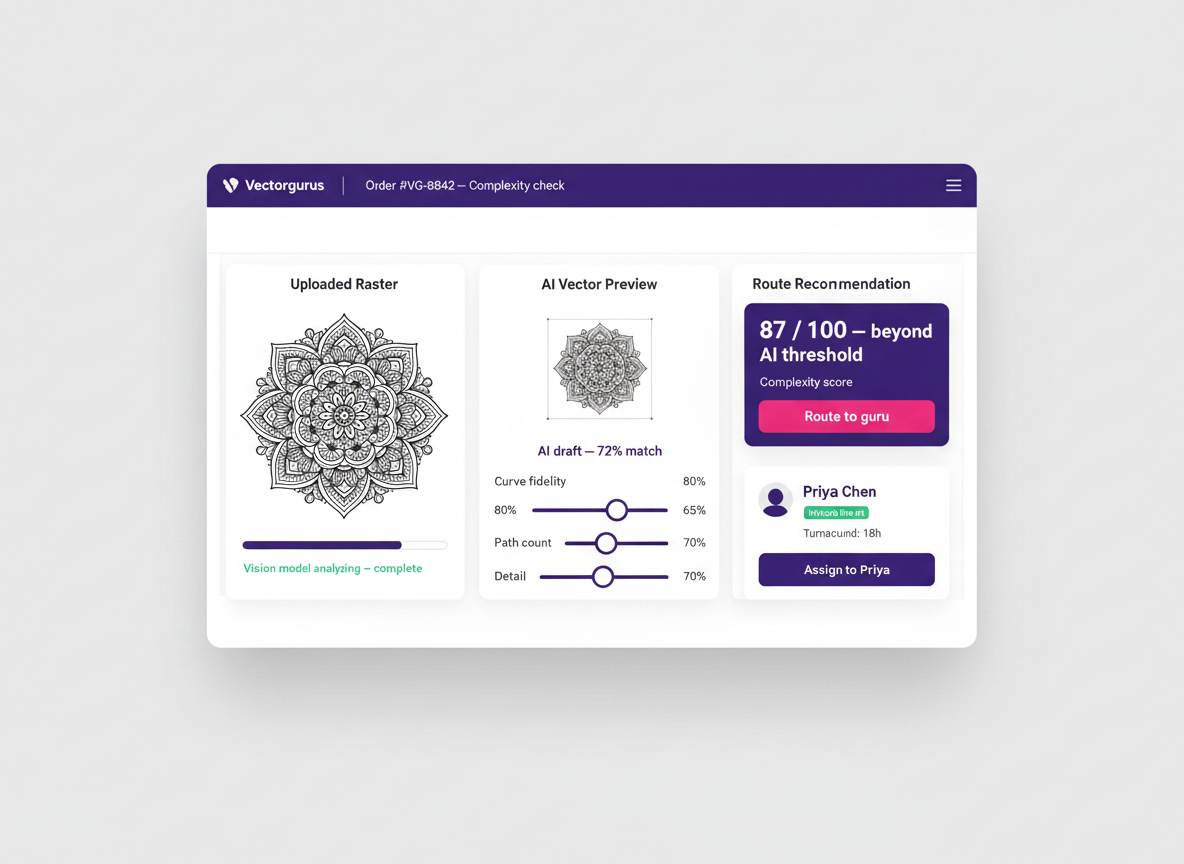
Vectorgurus complexity check routing an intricate mandala to a guru
02

A delivery pipeline built for how gurus actually work

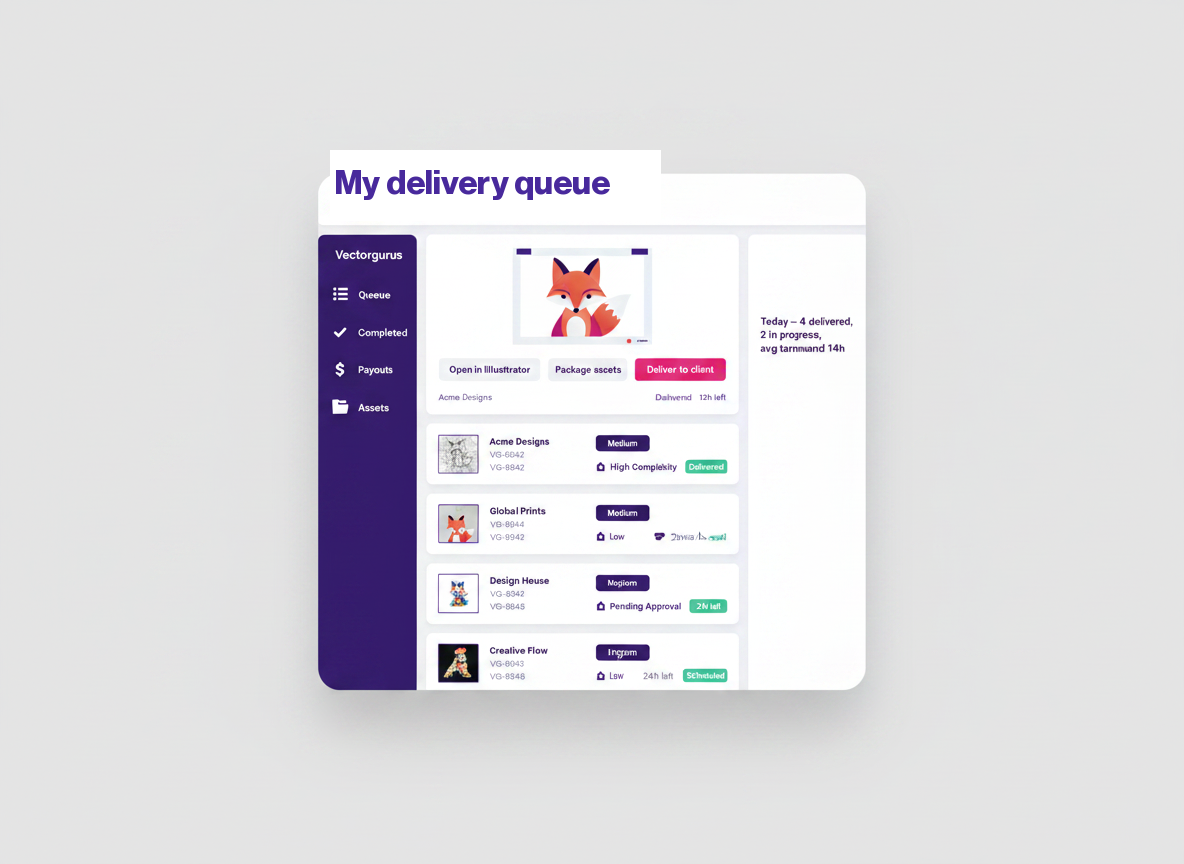
Gurus live in Illustrator. Their old workflow lived in fifteen browser tabs. We built a queue that pulls new orders straight into their working environment, packages assets on export, and delivers the final files to the customer the moment the guru clicks send.

Payouts, deadlines, and quality checks ride the same rail. A guru now spends their day drawing, not admin.

Vectorgurus guru delivery queue with Illustrator export
03

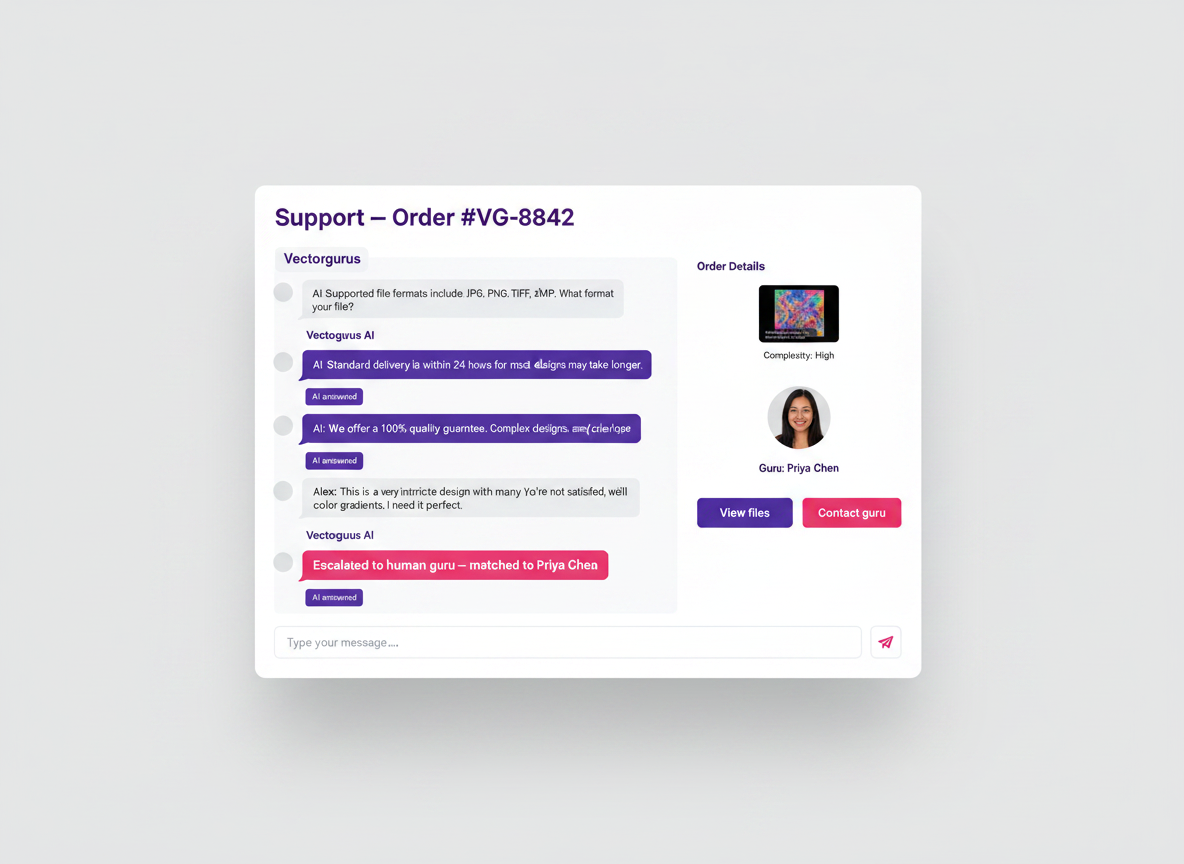
One customer thread, from AI answer to human handoff

We rebuilt the entire chat backend around one idea: the customer should never have to know whether they are talking to a model or a person. The AI support agent answers what it can and cites its source. Anything ambiguous escalates to the matched guru, in the same thread, with the order context already attached.

The vision model runs on every uploaded asset in the chat, so the AI can talk about the actual artwork instead of asking for a description.

Vectorgurus unified customer chat with AI support and guru escalation
04

The analytics that run the studio

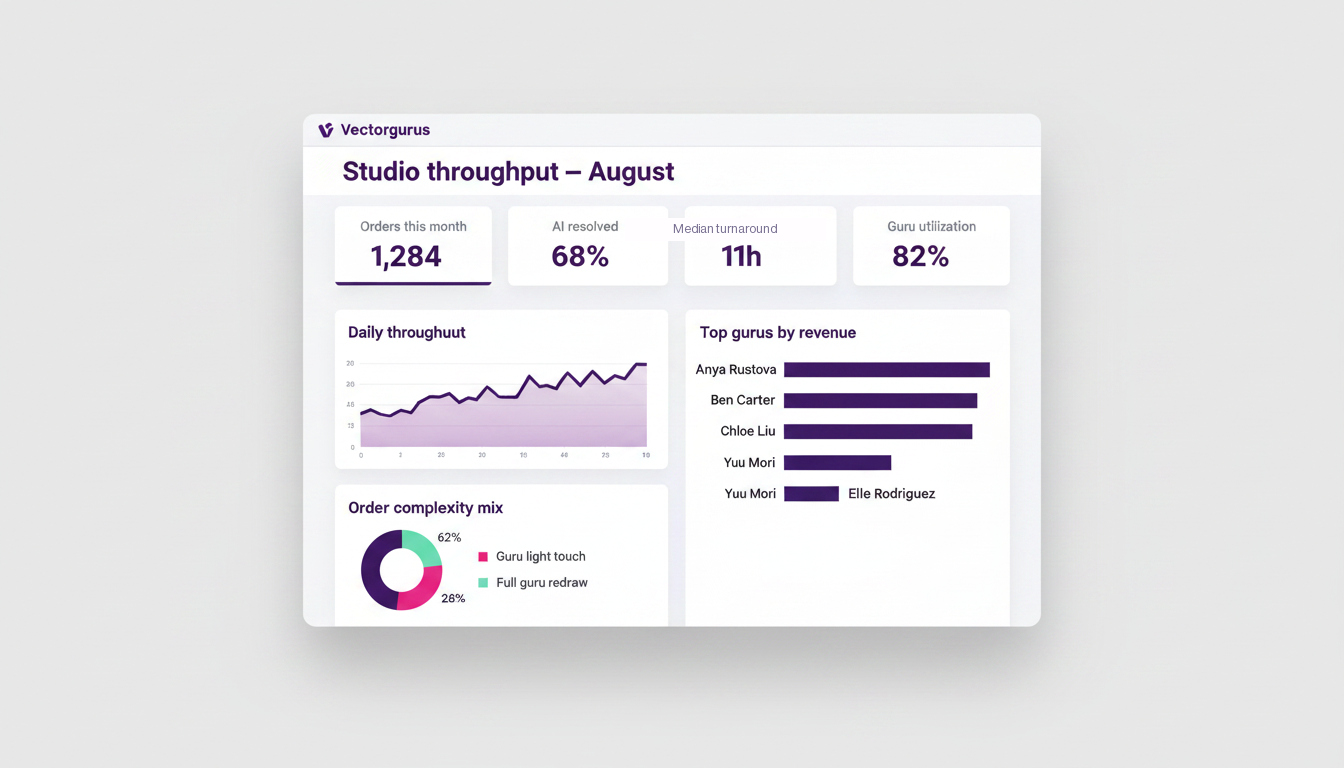
The operations dashboard turns the platform into an instrument. Throughput, AI resolution rate, guru utilisation, revenue mix by complexity tier: every lever the leadership team pulls now has a number behind it.

The same layer powers guru-facing views so illustrators see their own performance the way the business does. It also feeds a social automation pipeline that turns finished redraws into shareable before-and-after content without anyone touching a scheduler.

Vectorgurus studio analytics dashboard

“We used to sell a vectoriser. After the rebuild we sell a service where the machine and the human are on the same team, and the customer only sees the result.”

Founder, Vectorgurus

Building an AI product that still needs the best humans on the hard cases?